Showing posts with label cooling and heating systems. Show all posts

Tuesday, June 20, 2023

Refrigeration and Heating Temperature Controller

The refrigeration and heating temperature controller can provide rapid exothermic and endothermic chemical reaction tests within the temperature range of -120°C~+250°C, and is mainly used in dynamic constant temperature control of cold and heat sources such as reactors, reactors, and combined chemistry, as well as in the pharmaceutical industry In low temperature distillation, rectification, extraction and other equipment.

​The composition of the refrigeration and heating temperature controller mainly includes several parts such as sensors, actuators, and controllers. The sensor is mainly responsible for collecting the temperature change inside the reactor and sending the collected signal to the controller. The actuator is mainly responsible for controlling the heating or cooling equipment in the reactor according to the instructions of the controller. The controller is the core component of the whole system, which is responsible for analyzing and processing the data collected by the sensor, and sending control signals to the actuator to ensure that the internal temperature of the reactor is always kept within the set value range.

During the design and implementation of the refrigeration and heating temperature controller, the following factors need to be considered.

1. The temperature sensor of the refrigeration and heating temperature controller is selected to ensure that the sensor can accurately and stably collect the temperature changes inside the reactor, and it can also work normally in harsh environments.

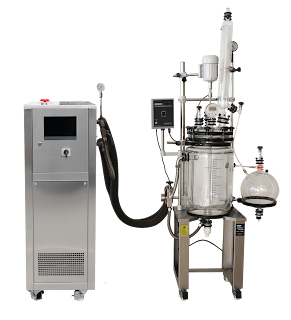
refrigeration and heating temperature controller


2. The design of the controller of the refrigeration and heating temperature controller needs to consider the stability and reliability of the controller, as well as the computing power and real-time performance of the controller, so as to ensure that the controller can process the collected data in a timely and accurate manner, and provide The actuator sends the appropriate control signal.

3. The selection and design of the actuator of the refrigeration and heating temperature controller needs to consider the control accuracy and response speed of the actuator to ensure that the actuator can quickly and accurately respond to the control signal from the controller and control the temperature change inside the reactor.

Advantages of Industrial Cooling and Heating All-in-one Machine

The industrial cooling and heating integrated machine is mainly used to control the temperature change inside the reactor to ensure that the temperature inside the reactor is always kept within the set value range, so as to meet the needs of chemical reactions and ensure the smooth progress of the production process.

First, the advantages of industrial cooling and heating all-in-one machine:

1. Realize accurate positioning control of the internal temperature of the reactor, so that the internal temperature of the reactor is always kept within the set value range.

2. It has a certain automatic control ability, and can automatically adjust the working state of the heating or cooling equipment in the reactor according to the temperature change inside the reactor, so as to realize the automatic control of the reactor temperature.

3. It has certain reliability, which can avoid problems such as chemical reaction runaway and production accidents caused by too high or too low internal temperature of the reactor.

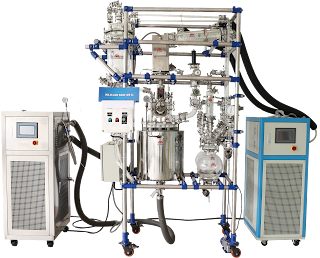
heater chiller combo


Second, points for attention in practical application of industrial cooling and heating all-in-one machine:

1. The components need regular maintenance and overhaul to ensure the normal operation and service life of each component.

2. During the use of industrial cooling and heating all-in-one machines, it is necessary to strictly abide by the operating procedures and operating requirements to avoid production accidents caused by operational errors and other problems.

3. It is necessary to carry out systematic inspection and testing on the industrial cooling and heating all-in-one machine to ensure the stability and reliability of the system.

The industrial cooling and heating machine can effectively control the internal temperature of the reactor, ensure the stability of the production process, and improve the production efficiency and product quality of the reactor.

Monday, June 19, 2023

The principle and application of cooling and heating circulator

 The cooling and heating circulator is a temperature control device for refrigeration and heating used in the fields of medicine, chemical industry, laboratory, scientific research, industry and production. It can control the temperature within a temperature range to meet the experimental temperature requirements of various applications.

1. The principle of cooling and heating circulator:

The cooling and heating circulator usually adopts a compression cycle refrigeration system, which is mainly composed of a compressor, a condenser, an expansion valve and an evaporator, etc., which can circulate the refrigerant to absorb and release heat, thereby realizing the process of cooling or heating.

When the temperature is lower than the set temperature, the refrigeration system of the cooling and heating circulator starts, and the compressor compresses the low-temperature refrigerant to form a high-temperature and high-pressure refrigerant, which dissipates heat through the condenser and turns it into a low-temperature refrigerant, which expands through the expansion valve And enter the evaporator, absorb heat in the evaporator to achieve refrigeration. When the temperature is higher than the set temperature, the heater starts to heat through the heating element, thereby increasing the temperature. The heating principle of the heater is opposite to the cooling principle of the refrigerator.

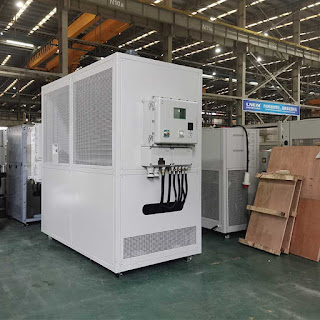
cooling heating system


The cooling and heating circulator can control the temperature of the device and keep it constant, the user can set the desired temperature, and monitor and control the temperature of the device through the built-in sensor. The cooling and heating circulator can be used in different environments and adapted to various needs.

2. Application fields of cooling and heating circulator:

1) Laboratory: It can be used in chemical experiments, biological experiments, medical experiments and other fields in the laboratory, and can meet the constant temperature requirements of different experiments.

2) Chemical industry: Accurate temperature control is required in the production of chemical products, which can meet the temperature control needs of various chemical industry production fields.

3) Food industry: It can be used in food processing to ensure the quality and safety of food.

4) Electronics industry: Accurate temperature control is required in the manufacturing process of circuit boards, and this requirement can be met.

Cooling & Heating Systems for Chemical Reactors

In the pharmaceutical industry, reaction kettles are common process equipment, and they can appear in various forms according to different uses, such as crystallization kettles, synthesis kettles, hydrogenation kettles, etc. In the research and development, preparation or synthesis reaction process of pharmaceutical and chemical industry, the accurate control of the temperature in the kettle is the key factor to determine the reaction, and the temperature control curve parameter of the cooling & heating system is one of the main controlled quantities in the reaction process.

In the chemical reaction process, the reactor is one of the links in the production process, and the design of the reactor and the selection of supporting facilities are often very important. Compared with other monomer process equipment, the reactor mainly completes the mass transfer and heat transfer of the reaction system, and the effective transfer and accurate control of energy (cold/heat) will directly affect the temperature control accuracy of the reactor.

According to the characteristics of the reaction, the reactor can be divided into endothermic reaction and exothermic reaction. In general, polymerization reactions are exothermic reactions, while fission reactions are endothermic reactions. The operation process of the reactor generally includes four stages of preheating, heating, constant temperature and cooling. Among them, the constant temperature section is a key stage reflecting the process, which has an impact on product quality and output, so improving the control accuracy of the constant temperature section of the cooling & heating system is the key to improving product quality.

The actual reaction process of cooling & heating system is often accompanied by a strong exothermic effect, which changes the reaction temperature. According to the characteristics of the temperature control of the reactor, the equipment adopts the reactor cooling & heating system based on PID control, and through the online learning function of the neural network, the automatic adjustment and self-adaptive ability of the system are enhanced to make the reactor control more stable.

reactor temperature control systems


A chemical reactor is usually a complex system involving various factors such as temperature, pressure, concentration, flow, etc. The quality of the production process largely depends on the control of process parameters (such as temperature, pressure, flow, etc.). Therefore, the temperature, pressure, flow rate and composition of materials in the cooling & heating system are stable during the production process, which can greatly improve the quality and output of the product, and achieve the goals of stability, reliability, production, energy saving and consumption reduction, thereby improving production efficiency , increase the economic benefits of the enterprise.

The temperature control accuracy of the reaction process is being paid attention to by more and more pharmaceutical companies. With the emergence of specific process energy control and accurate control units, the cooling & heating system can continuously realize the innovation of original research drugs, continuously improve the quality of generic drugs, and reduce the overall operating costs for enterprises. Provide strong protection.

Sunday, June 18, 2023

How to choose the reactor temperature control system?

Reactor temperature control system can be used in various chemical reactions, so how to choose?

The reaction kettle is one of the common industrial equipment used to carry the chemical reaction process. To ensure the success of these processes, the reactor needs to be maintained at the proper temperature. The reactor temperature control system is an industrial device used to maintain the temperature of the reactor.

1. Understand the temperature requirements of the reactor.

The reaction temperature is usually determined by the physical and chemical properties of the desired product, as well as the reaction rate and other factors. In some cases, the reaction temperature has to be kept within a very narrow range in order to obtain suitable product properties. Therefore, when selecting a reactor temperature control system, ensure that the equipment can provide the required temperature range and accuracy.

2. Understand heating and cooling methods

Heating and cooling methods are also very important considerations when choosing a reactor temperature control system. The heating method can be used to heat the reactor and keep the temperature within the required temperature range.

3. Understand refrigeration methods and refrigerants

For some reactors, it may be necessary to use refrigeration to bring the temperature down to the desired range. Refrigeration methods generally include liquid cycle refrigeration, refrigeration based on compressors or absorption machines, and refrigeration methods based on solid-state refrigeration technology. When selecting a reactor temperature control system, please ensure that the selected equipment can provide the required refrigeration method and refrigerant to ensure the success of the reaction.

4. Understand the size of the reactor

The size and material of the reactor are also important considerations for choosing a reactor temperature control system. The size of the reactor reflects the reaction volume and heat required in the reactor. The selected equipment is capable of meeting the reaction volume requirements to ensure that the temperature can be maintained stably and rapidly during the reaction.

5. Understand the materials of the reactor

The choice of materials is also very important. Reactors are often made of different materials including glass, stainless steel, plastic and corrosion resistant materials. Each material has its advantages and disadvantages, therefore, when selecting a reactor temperature control system, consider factors such as thermal conductivity and heat capacity of the selected material.

6. Understand the operation requirements

When selecting a reactor temperature control system, it is also very important to consider the operation and control requirements. The equipment is easy to operate so that the temperature can be monitored and adjusted in time during the reaction.

7. Understand the control requirements of equipment

The controller of the reactor temperature control system is very sensitive and reliable to ensure that the equipment can control the temperature accurately.

Thursday, June 15, 2023

Applications of Heater & Chiller Combo

 Heater & chiller combo is a device that uses different heat transfer media for dynamic temperature control process of fluid cooling and heating. It is often used for process temperature control equipment in pharmaceutical, chemical, new energy, semiconductor and other industries. It is generally used for reaction kettles, reaction Refrigeration, heating and temperature control of materials in experimental equipment such as evaporators, distillation and evaporators.

1. Semiconductor industry: It can be used for environmental testing of components and simulation testing of electronic components. In semiconductor production and testing of electronic devices, there are many processes that require accurate temperature control. The heater & chiller combo can be used for high and low temperature control tests.

2. New energy automobile industry: The requirements for temperature control in the automobile industry are generally in the test bench and material testing links. All automotive components are subject to high temperature fluctuations.

3. Aviation industry: It can be used for heat sink experiments, component environment simulation tests, and evaporative cooling environment simulation tests. The cyclic temperature change stress test of the heater & chiller combo ensures that the components used are free from failure.

4. Pharmaceutical industry: synthesis, hydrolysis, esterification, etherification and other processes that require temperature control. In the pharmaceutical industry, the temperature control of the different reactions plays a decisive role both in the quality of development and in the results of production. Thermostatic control of bioreactors plays a vital role in successful production. As an integral part of sample preparation, there are many production steps that require reliable temperature control equipment for temperature control.

5. Chemical industry: rectification purification, rubber crushing, cryogenic grinding, chemical synthesis. In many processes in the field of chemistry, such as chemical reactions, synthesis, production of basic components of pharmaceuticals, polymerization and crystallization are carried out in reactors with temperature control. Therefore, the temperature control of the reactor is a very important factor in the whole process.

Reactor Cooling & Heating Temperature Control System

 Reactor refrigeration and heating temperature control systems are used in many industries. The problems and requirements that need to be paid attention to during the use of equipment used in different industries are different, which is also a relatively normal phenomenon.

So now many manufacturers will check before the process of use to see if the equipment meets the requirements. Only if it meets the requirements can problems be avoided during use.

1. According to the requirements of the installation site provided by the supplier, prepare the environment for placement. The factors to be considered are: the distance between adjacent walls or objects; the temperature and humidity of the environment in which the equipment is used; whether the ground for placing the equipment is level; whether there is good ventilation And avoid direct sunlight; places away from combustibles, explosives and high-temperature heat sources; places with little dust; places close to the power supply and need to have a standard power supply: three-phase five-wire system 380V/50HZ.

2. In order to avoid safety accidents such as electric shock and equipment failure, please do not turn on the power supply before the installation and wiring are completed, and the wiring must be correct, and must be grounded. If the ground wire is not connected, it may lead to electric shock, abnormal display of the equipment or large errors in measurement.

3. In order to ensure the reasonable and correct operation of the instrument operation equipment, please regularly calibrate the instrument and maintain the whole equipment.

4. Check whether the steering of the oil pump is correct; separate the compressor from the motor, and check whether the steering of the motor is correct.

5. Check whether the differential pressure relay for the suction side, the filter, the pressure relay for the exhaust side, the pressure for oil pressure and cooling water, the relay and the oil pressure relay are sensitive.

6. Add compressor oil into the cooler, and the amount of oil added should be kept at 1/2 to 3/4 of the oil sight glass; install the coupling and correct it.

OUR WEBSITE: lneya-online.com

Tuesday, December 13, 2022

Factors affecting the service life of high and low temperature integrated machines

According to the temperature and medium, the high and low temperature integrated machine can be divided into oil-cooled high and low temperature integrated machine and water-cooled high and low temperature integrated machine. The service life of the high and low temperature all-in-one machine is generally 5-10 years, and there are many reasons that affect its aging and reduce the service life. Let's briefly understand the following points.

high and low temperature integrated machines

1. Working temperature: As the machine operation will generate high temperature and the surrounding temperature will rise, which will increase the intensity of light and the degree of destruction. Therefore, when working with high and low temperature equipment, it is necessary to grasp the application range of temperature.

2. Humid and cold environment: General humidity, precipitation, dew, etc. are all factors that cause dampness and coldness of machinery and equipment. Dewdrops produced by moisture are the key factors for outdoor dampness and coldness. Natural ventilation should be considered, otherwise it will cause severe damp and cold digestion and absorption.

3. Seal failure: Seal failure is caused by corrosion, heat loss, wear, installation, operation and other reasons. After the autoclave mechanical seal is removed, the sealing surface is not scratched or worn, so physical damage to the sealing surface can be ruled out. According to the various manifestations of crystallization, fouling and mechanical seal failure in the sealed inner cavity, it is preliminarily determined that the easy crystallization and corrosion of the conveying medium are the main reasons for the seal failure.

How to clean heating and cooling equipment?

Intelligent heating and cooling equipment is mainly used to control the temperature of various reactors. Compressor cooling is used to heat the heat transfer oil, and the medium in the cold tank is heated to high temperature by the heater. According to the needs of users, the temperature of the storage tank medium in high and low temperature environments can be quickly adjusted. Long-term operation will cause fouling on the surface of the condenser of the equipment, which will seriously affect the normal operation of the high and low temperature equipment in the laboratory.

heating and cooling equipment

1. The intelligent heating and cooling equipment is an integral equipment. The refrigeration system and the heating system are installed in the same case. This equipment is generally installed indoors and placed on a well-ventilated, dust-free, cool ground or test bench to avoid droplets. , water vapor, high-frequency equipment (high-frequency welding machine), and places where acidic solutions are frequently used.

2. If you want to clean the equipment, you must disassemble the machine first, because the parts to be cleaned are invisible inside. The various parts of the refrigeration unit intersect with each other, and the pipelines are complicated and difficult to disassemble. First of all, we must understand the basic situation of the entire structure.

3. Clean the connection between the equipment and the condenser. After disassembling in the previous step, find out the direction of the water inlet of the condenser, connect it to the water inlet or water outlet of the water pump, and then use tools to heat the pipe.

4. After confirming that each step is completed, add clean water to wash for 20 minutes, then discharge the sewage, repeat this three times, and finally need cleaning agents. Of course, the pH value should be kept between 4-5 for 2-3 hours.

5. After cleaning, install it according to the original shape. This is the main step for cleaning intelligent heating and cooling equipment.

Precautions for operation of refrigeration and heating all-in-one machine

The high and low temperature all-in-one machine is a new type of laboratory temperature control equipment, which has the functions of heating and cooling at the same time, and can achieve continuous temperature control from -120 ° C to 300 ° C with the same medium, eliminating the cumbersome steps of replacing the medium. According to the temperature and medium, the high temperature all-in-one machine is divided into oil-cooled high-low temperature all-in-one machine and water-cooled high-low temperature all-in-one machine. Applied to petrochemical, pharmaceutical and other chemical reaction process control.

1. Operation requirements. Equipment management personnel need to be familiar with the basic performance and main operation steps of the equipment, keep the technical data and operating instructions properly, and then check the protection device according to the start-up requirements of the equipment, control the ambient temperature, humidity, continuous working time, power supply voltage, etc., pay attention to moisture, Dust and corrosion resistant.

refrigeration and heating all-in-one machine

2. Power requirements. Conduct a power-on inspection, and if any circuit failure is found, please immediately shut down the device and report to the person in charge to prevent damage to the instrument due to short circuit. The power used by the high-precision high-low temperature all-in-one machine needs to meet the total power requirements of the machine, and the models of all-in-one machines are different, so the power should be determined according to the specific model. The required power is greater than the total power of the device, and the power supply needs to be grounded to ensure the use of

3. Shutdown request. If you do not use the device temporarily, you need to turn off the switch and unplug the power cord. The liquid in the storage tank also needs to be cleaned.

4. Maintenance requirements. Regularly maintain high-precision high and low temperature temperature control machines, solve instrument failures in time, maintain records, and clean and maintain large-scale equipment 2-4 times a year. Damaged equipment should be inspected by relevant personnel.

Features of cooling and heating systems

1. Heating and cooling system: -120 ~ +300°C, temperature control accuracy ±0.5°C.

2. Refrigeration: Single-unit cascade refrigeration is adopted, and the cooling capacity: 1 to 1000KW is available.

3. Control system: programmable PLC plus touch screen.

4. With RS485 and R232 interfaces, it can communicate with the computer so as to accept the setting and control of the computer and transmit the measured temperature to the computer.

5. Imported heat transfer fluid can be used.

cooling and heating systems

6. The transmission pump adopts a magnetic pump, which has no leakage, no pollution and high lift.

7. The liquid storage tank and the pipeline are sealed and pressure-bearing to prevent the volatilization, condensation and freezing of the refrigerant, and there is a liquid level indicator.

8. For small load heating, the hot gas bypass of the compressor can be used to heat the load.

9. Multiple alarm protections: water cut off, high water temperature, circulating pump failure, compressor overheating, high pressure, overcurrent, phase loss, phase continuity, etc.

10. Heat dissipation method: air cooling and water cooling are optional, and the air-cooled condenser can be placed outdoors. Due to the many industries and purposes of the equipment application, the model cannot be fixed, and most of them need to be tailored according to the actual situation of the user.

High polymer material oligomer cooling equipment

 As an important polymer material, oligomers are widely used in plastic products, adhesives, coatings, elastic materials and other fields. I...