Showing posts with label reactor temperature control. Show all posts

Monday, June 19, 2023

Cooling & Heating Systems for Chemical Reactors

In the pharmaceutical industry, reaction kettles are common process equipment, and they can appear in various forms according to different uses, such as crystallization kettles, synthesis kettles, hydrogenation kettles, etc. In the research and development, preparation or synthesis reaction process of pharmaceutical and chemical industry, the accurate control of the temperature in the kettle is the key factor to determine the reaction, and the temperature control curve parameter of the cooling & heating system is one of the main controlled quantities in the reaction process.

In the chemical reaction process, the reactor is one of the links in the production process, and the design of the reactor and the selection of supporting facilities are often very important. Compared with other monomer process equipment, the reactor mainly completes the mass transfer and heat transfer of the reaction system, and the effective transfer and accurate control of energy (cold/heat) will directly affect the temperature control accuracy of the reactor.

According to the characteristics of the reaction, the reactor can be divided into endothermic reaction and exothermic reaction. In general, polymerization reactions are exothermic reactions, while fission reactions are endothermic reactions. The operation process of the reactor generally includes four stages of preheating, heating, constant temperature and cooling. Among them, the constant temperature section is a key stage reflecting the process, which has an impact on product quality and output, so improving the control accuracy of the constant temperature section of the cooling & heating system is the key to improving product quality.

The actual reaction process of cooling & heating system is often accompanied by a strong exothermic effect, which changes the reaction temperature. According to the characteristics of the temperature control of the reactor, the equipment adopts the reactor cooling & heating system based on PID control, and through the online learning function of the neural network, the automatic adjustment and self-adaptive ability of the system are enhanced to make the reactor control more stable.
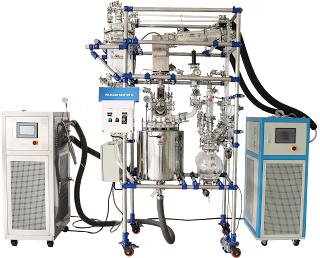
reactor temperature control systems


A chemical reactor is usually a complex system involving various factors such as temperature, pressure, concentration, flow, etc. The quality of the production process largely depends on the control of process parameters (such as temperature, pressure, flow, etc.). Therefore, the temperature, pressure, flow rate and composition of materials in the cooling & heating system are stable during the production process, which can greatly improve the quality and output of the product, and achieve the goals of stability, reliability, production, energy saving and consumption reduction, thereby improving production efficiency , increase the economic benefits of the enterprise.

The temperature control accuracy of the reaction process is being paid attention to by more and more pharmaceutical companies. With the emergence of specific process energy control and accurate control units, the cooling & heating system can continuously realize the innovation of original research drugs, continuously improve the quality of generic drugs, and reduce the overall operating costs for enterprises. Provide strong protection.

Sunday, June 18, 2023

How to choose the reactor temperature control system?

Reactor temperature control system can be used in various chemical reactions, so how to choose?

The reaction kettle is one of the common industrial equipment used to carry the chemical reaction process. To ensure the success of these processes, the reactor needs to be maintained at the proper temperature. The reactor temperature control system is an industrial device used to maintain the temperature of the reactor.

1. Understand the temperature requirements of the reactor.

The reaction temperature is usually determined by the physical and chemical properties of the desired product, as well as the reaction rate and other factors. In some cases, the reaction temperature has to be kept within a very narrow range in order to obtain suitable product properties. Therefore, when selecting a reactor temperature control system, ensure that the equipment can provide the required temperature range and accuracy.

2. Understand heating and cooling methods

Heating and cooling methods are also very important considerations when choosing a reactor temperature control system. The heating method can be used to heat the reactor and keep the temperature within the required temperature range.

3. Understand refrigeration methods and refrigerants

For some reactors, it may be necessary to use refrigeration to bring the temperature down to the desired range. Refrigeration methods generally include liquid cycle refrigeration, refrigeration based on compressors or absorption machines, and refrigeration methods based on solid-state refrigeration technology. When selecting a reactor temperature control system, please ensure that the selected equipment can provide the required refrigeration method and refrigerant to ensure the success of the reaction.

4. Understand the size of the reactor

The size and material of the reactor are also important considerations for choosing a reactor temperature control system. The size of the reactor reflects the reaction volume and heat required in the reactor. The selected equipment is capable of meeting the reaction volume requirements to ensure that the temperature can be maintained stably and rapidly during the reaction.

5. Understand the materials of the reactor

The choice of materials is also very important. Reactors are often made of different materials including glass, stainless steel, plastic and corrosion resistant materials. Each material has its advantages and disadvantages, therefore, when selecting a reactor temperature control system, consider factors such as thermal conductivity and heat capacity of the selected material.

6. Understand the operation requirements

When selecting a reactor temperature control system, it is also very important to consider the operation and control requirements. The equipment is easy to operate so that the temperature can be monitored and adjusted in time during the reaction.

7. Understand the control requirements of equipment

The controller of the reactor temperature control system is very sensitive and reliable to ensure that the equipment can control the temperature accurately.

High polymer material oligomer cooling equipment

 As an important polymer material, oligomers are widely used in plastic products, adhesives, coatings, elastic materials and other fields. I...