Monday, June 19, 2023

Laboratory Refrigerated and Heating Circulators

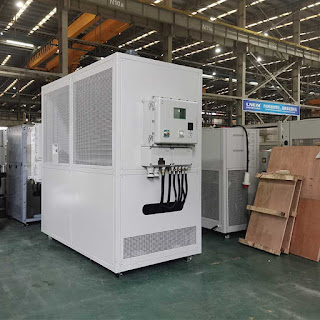
Laboratory refrigerated and heating circulators is a kind of equipment that can provide cooling and heating fluid temperature control. It uses different media to circulate high temperature and low temperature in the pipeline system. The heat release or heat absorption will be circulated to the reactor jacket through the circulation pump. Inside, the cycle is carried out, so that the matching reactor can meet the required temperature requirements.

Laboratory refrigerated and heating circulators are mainly used in combination with double-layer glass reactors, which can provide a circulation device with heat source and cold source. It has a wide range of work and is used in pharmaceutical, chemical, biochemical, biological and other industries. It is a reactor, A heat source such as a storage tank is provided, and a cold source can also be used to heat and cool other equipment.

Laboratory refrigerated and heating circulators can be equipped with various types of reaction kettles, reaction tanks, and stirring tanks for refrigeration and heating temperature control, and can be equipped with distillation, extraction, etc. for high and low temperature and ultra-low temperature control to achieve the effect of separation. In addition to the pharmaceutical and chemical industries, our company can also conduct high and low temperature tests for high and low temperature performance capabilities for the material testing industry, components and semiconductor industries, etc.; it can also perform high and low temperature tests for batteries and motors in the new energy industry.

refrigerated heating circulator

Different models and temperatures of laboratory refrigerated and heating circulators use different media, including heat transfer oil, water, and ethylene glycol aqueous solution. The equipment is similar to the mold temperature controllers, high and low temperature all-in-one machines, and all-in-one cooling and heating machines on the market, but the functions, configurations, and parameters of each manufacturer are different.

Laboratory refrigerated and heating circulators now adopt PID intelligent temperature control technology, which can be heated, constant temperature or cooled. The current temperature control requirement can reach ±0.5°C. The equipment adopts multi-point temperature control technology, and the pipeline and electrical parts can be isolated and explosion-proof. , the temperature range is relatively large, and the temperature rise and fall are relatively uniform and stable.

Laboratory refrigerated and heating circulators require manufacturers to design and customize technical solutions. If the configuration is too low, it will be difficult to achieve the required hot and cold temperatures. If the configuration is too high, it will cause excessive power, causing unnecessary waste and increasing operating costs.

Sunday, June 18, 2023

How to choose the reactor temperature control system?

Reactor temperature control system can be used in various chemical reactions, so how to choose?

The reaction kettle is one of the common industrial equipment used to carry the chemical reaction process. To ensure the success of these processes, the reactor needs to be maintained at the proper temperature. The reactor temperature control system is an industrial device used to maintain the temperature of the reactor.

1. Understand the temperature requirements of the reactor.

The reaction temperature is usually determined by the physical and chemical properties of the desired product, as well as the reaction rate and other factors. In some cases, the reaction temperature has to be kept within a very narrow range in order to obtain suitable product properties. Therefore, when selecting a reactor temperature control system, ensure that the equipment can provide the required temperature range and accuracy.

2. Understand heating and cooling methods

Heating and cooling methods are also very important considerations when choosing a reactor temperature control system. The heating method can be used to heat the reactor and keep the temperature within the required temperature range.

3. Understand refrigeration methods and refrigerants

For some reactors, it may be necessary to use refrigeration to bring the temperature down to the desired range. Refrigeration methods generally include liquid cycle refrigeration, refrigeration based on compressors or absorption machines, and refrigeration methods based on solid-state refrigeration technology. When selecting a reactor temperature control system, please ensure that the selected equipment can provide the required refrigeration method and refrigerant to ensure the success of the reaction.

4. Understand the size of the reactor

The size and material of the reactor are also important considerations for choosing a reactor temperature control system. The size of the reactor reflects the reaction volume and heat required in the reactor. The selected equipment is capable of meeting the reaction volume requirements to ensure that the temperature can be maintained stably and rapidly during the reaction.

5. Understand the materials of the reactor

The choice of materials is also very important. Reactors are often made of different materials including glass, stainless steel, plastic and corrosion resistant materials. Each material has its advantages and disadvantages, therefore, when selecting a reactor temperature control system, consider factors such as thermal conductivity and heat capacity of the selected material.

6. Understand the operation requirements

When selecting a reactor temperature control system, it is also very important to consider the operation and control requirements. The equipment is easy to operate so that the temperature can be monitored and adjusted in time during the reaction.

7. Understand the control requirements of equipment

The controller of the reactor temperature control system is very sensitive and reliable to ensure that the equipment can control the temperature accurately.

Circulation Heater

Circulation heater refers to the ability to provide refrigeration and heating at the same time, also known as refrigeration and heating systems, which can provide a wide temperature range, and the medium can use heat transfer oil, ethylene glycol solution, water, ethanol, etc. as required.

1. What are the characteristics of the circulation heater?

The circulation heater is composed of refrigeration system, electric heating, circulation pump, expansion tank, PLC controller, etc. The components are all brand-name, with strong reliability, and can realize a wide range of temperature control from a low temperature of -120°C to a high temperature of 350°C , high temperature, no oil fume, low temperature, no condensation, high degree of customization, and can be customized according to the application characteristics of different industries.

2. How to choose the type of circulation heater?

The selection of the circulation heater generally needs to provide the application industry, process requirements, site environment, etc. For example, chemical and pharmaceutical industries need to control the temperature of the reactor, and the process requirements of the materials need to be provided: temperature range, temperature control accuracy, reactor specifications, temperature Variable speed, whether explosion-proof is required, whether the equipment is air-cooled or water-cooled, etc., we have rich supporting experience in many industries, and can quickly match the equipment to meet the needs according to the content provided.

3. What are the environmental requirements of the circulation heater?

The design of the circulation heater is mainly for indoor applications. If it is placed outdoors, it must be explained in advance, so as to design and handle different waterproof and dustproof levels according to the site environment; the circulation heater is generally divided into water-cooled and air-cooled. Air-cooled equipment requires good ventilation and heat dissipation on site. , Water cooling needs to be configured with circulating water or chilled water; if large equipment is placed on the floor, load bearing needs to be considered.

4. What are the advantages of circulation heater?

The circulation heater is mainly used to control the oil temperature of the reactor jacket, and at the same time monitor the return oil temperature, which can directly control the temperature of the material in the reactor, or switch to control the oil temperature of the reactor jacket. The response is fast and can meet the process of the material in the reactor. accurate temperature control

5. What is the difference between explosion-proof and conventional circulation heater?

For use in hazardous gas areas, only circulation heaters that meet explosion-proof standards can be used; common explosion-proof standards include ExdIICT4, ExdIIBT4, positive pressure explosion-proof, etc., and the motors, electrical appliances, sensors, and explosion-proof cabinets used in explosion-proof circulation heaters must meet the requirements. corresponding standard. In comparison, the size of explosion-proof equipment will be larger, the cost will be higher, and the delivery cycle will be relatively longer.

Recirculating Heater Chiller

Recirculating heater chiller is a kind of temperature control equipment used in laboratories, medicine, chemical industry, new energy, semiconductor and other industries. It can control the constant temperature cycle of liquid or gas within a certain temperature range to meet the various needs of users. The following points need to be considered when purchasing a recirculating heater chiller.

1. Temperature range

The temperature range is an important consideration in choosing a recirculating heater chiller. Different industries and application fields have different requirements on the temperature range, and an appropriate temperature range needs to be selected according to the application scenario. Generally speaking, the temperature range of recirculating heater chiller can be from -100℃ to 200℃, or even higher.

2. Control precision

Control accuracy refers to the temperature control accuracy of the recirculating heater chiller. The higher the accuracy, the better the control effect. Generally speaking, the control accuracy of the equipment can reach ±0.1°C.

3. Model and specification

The model and specifications are another important factor in choosing a recirculating heater chiller. Different models and specifications are suitable for different applications. Users need to choose the appropriate model and specification according to specific needs to meet the needs of experiments or production.

4. Function configuration

The functional configuration of the recirculating heater chiller is also one of the factors that users need to consider. Different devices are configured with different functions, and users need to choose the functions they need to achieve the goal of experiment or production.

5. Supplier quality

When choosing a recirculating heater chiller, users need to choose a supplier with high reputation, rich experience, and good service quality to ensure product quality and after-sales service.

OUR WEBSITE: lneya-online.com

Thursday, June 15, 2023

Applications of Heater & Chiller Combo

 Heater & chiller combo is a device that uses different heat transfer media for dynamic temperature control process of fluid cooling and heating. It is often used for process temperature control equipment in pharmaceutical, chemical, new energy, semiconductor and other industries. It is generally used for reaction kettles, reaction Refrigeration, heating and temperature control of materials in experimental equipment such as evaporators, distillation and evaporators.

1. Semiconductor industry: It can be used for environmental testing of components and simulation testing of electronic components. In semiconductor production and testing of electronic devices, there are many processes that require accurate temperature control. The heater & chiller combo can be used for high and low temperature control tests.

2. New energy automobile industry: The requirements for temperature control in the automobile industry are generally in the test bench and material testing links. All automotive components are subject to high temperature fluctuations.

3. Aviation industry: It can be used for heat sink experiments, component environment simulation tests, and evaporative cooling environment simulation tests. The cyclic temperature change stress test of the heater & chiller combo ensures that the components used are free from failure.

4. Pharmaceutical industry: synthesis, hydrolysis, esterification, etherification and other processes that require temperature control. In the pharmaceutical industry, the temperature control of the different reactions plays a decisive role both in the quality of development and in the results of production. Thermostatic control of bioreactors plays a vital role in successful production. As an integral part of sample preparation, there are many production steps that require reliable temperature control equipment for temperature control.

5. Chemical industry: rectification purification, rubber crushing, cryogenic grinding, chemical synthesis. In many processes in the field of chemistry, such as chemical reactions, synthesis, production of basic components of pharmaceuticals, polymerization and crystallization are carried out in reactors with temperature control. Therefore, the temperature control of the reactor is a very important factor in the whole process.

Reactor Cooling & Heating Temperature Control System

 Reactor refrigeration and heating temperature control systems are used in many industries. The problems and requirements that need to be paid attention to during the use of equipment used in different industries are different, which is also a relatively normal phenomenon.

So now many manufacturers will check before the process of use to see if the equipment meets the requirements. Only if it meets the requirements can problems be avoided during use.

1. According to the requirements of the installation site provided by the supplier, prepare the environment for placement. The factors to be considered are: the distance between adjacent walls or objects; the temperature and humidity of the environment in which the equipment is used; whether the ground for placing the equipment is level; whether there is good ventilation And avoid direct sunlight; places away from combustibles, explosives and high-temperature heat sources; places with little dust; places close to the power supply and need to have a standard power supply: three-phase five-wire system 380V/50HZ.

2. In order to avoid safety accidents such as electric shock and equipment failure, please do not turn on the power supply before the installation and wiring are completed, and the wiring must be correct, and must be grounded. If the ground wire is not connected, it may lead to electric shock, abnormal display of the equipment or large errors in measurement.

3. In order to ensure the reasonable and correct operation of the instrument operation equipment, please regularly calibrate the instrument and maintain the whole equipment.

4. Check whether the steering of the oil pump is correct; separate the compressor from the motor, and check whether the steering of the motor is correct.

5. Check whether the differential pressure relay for the suction side, the filter, the pressure relay for the exhaust side, the pressure for oil pressure and cooling water, the relay and the oil pressure relay are sensitive.

6. Add compressor oil into the cooler, and the amount of oil added should be kept at 1/2 to 3/4 of the oil sight glass; install the coupling and correct it.

OUR WEBSITE: lneya-online.com

Features of closed high temperature heating system

 The closed high-temperature heating system is the equipment for the refrigeration and heating temperature control process in the pharmaceutical industry. In order to obtain the required reaction products in the production process, it is necessary to prepare the temperature control equipment to carry out stable and reliable process refrigeration and heating temperature for reactors of various materials and sizes. control.

The characteristics of the closed high temperature heating system:

The closed high-temperature heating system is a machine that integrates cooling and heating. It is a sealed liquid circulation system and has unique advantages in heating.

1. The entire liquid circulation of the closed high-temperature heating system is a closed system, there is no water vapor absorption at low temperature, and no oil mist is generated at high temperature.

2. The closed high-temperature heating system can realize continuous temperature rise and fall, and adopts the technology of operating the compressor under high temperature and high pressure. The compressor can be directly turned on for refrigeration at 200 degrees, which greatly improves the cooling speed.

3. Equipped with a heating and cooling integrated container, the heat exchange area is large, the heating and cooling speed is fast, and the demand for heat transfer oil is relatively small.

heating systems

How to use the closed high-temperature heating system

1. Install a liquid inlet valve at the liquid inlet. Note: There are liquid inlet and outlet marks on the top of the machine, the valve is a stop valve, the medium flow direction of the valve has a direction, the valve has a flow direction mark, and the oil level gauge has an observation window.

2. The valve is connected to the external circulation equipment such as the reactor with a hose, the inlet and outlet of the reactor are up and down, and the medium in the reactor is kept in place.

3. Open the liquid filling hole of the closed high-temperature heating system, put the refrigerant in, and turn on the machine cycle switch to make the liquid circulate throughout the system.

4. The cooling medium can meet the conditions of use. The closed high-temperature heating system uses double-layer glass reactors, stainless steel jacketed reactors, glass reactors, rotary evaporators, extraction equipment and other products together. When the temperature of the matching device needs to be raised or lowered rapidly, the equipment can quickly reach set temperature.


OUR WEBSITE: lneya-online.com

High polymer material oligomer cooling equipment

 As an important polymer material, oligomers are widely used in plastic products, adhesives, coatings, elastic materials and other fields. I...